

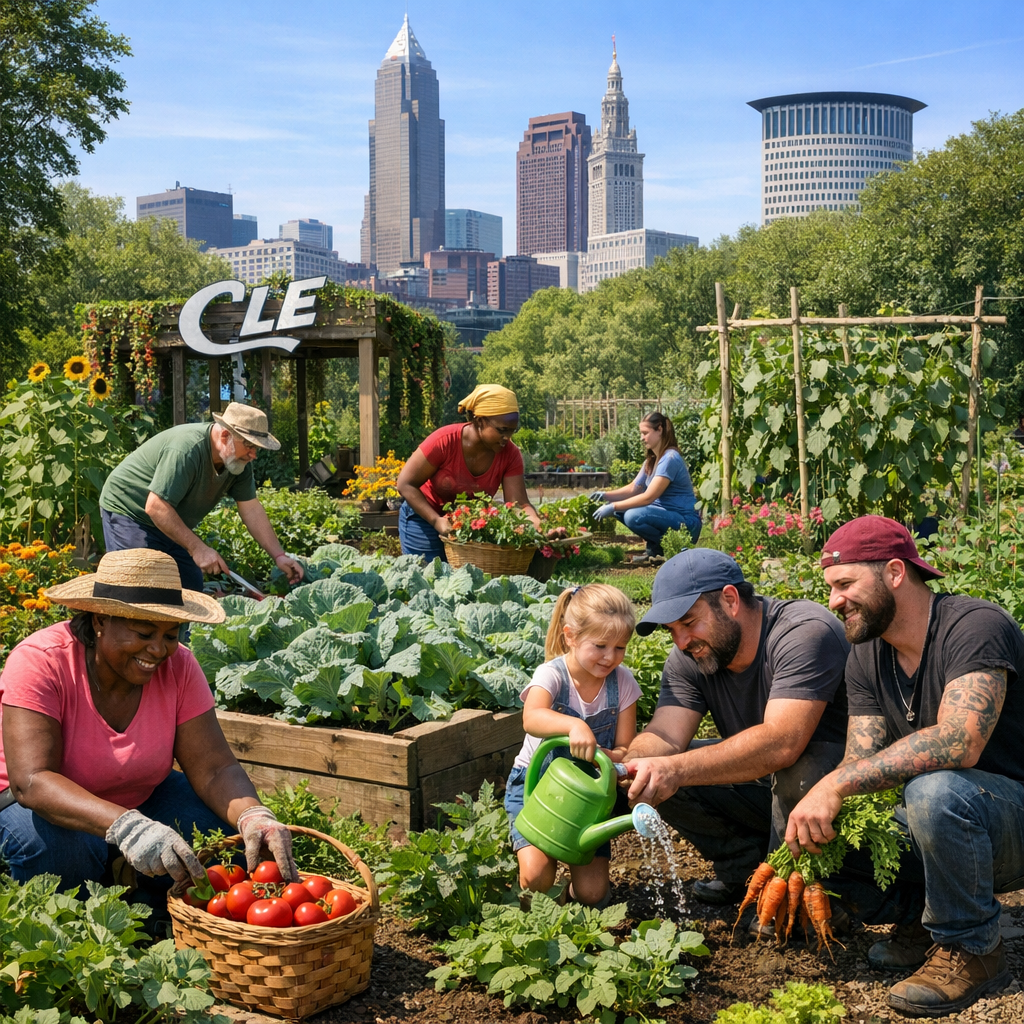
Community gardens have long been a cornerstone of urban life in Cleveland, offering residents not only a source of fresh produce but also a space for connection and collaboration. These green spaces serve as vital hubs where neighbors come together to cultivate plants, share knowledge, and strengthen community bonds.
The Roots of Community Gardening in Cleveland
One of the city’s oldest community gardens, Kentucky Gardens, located in the Ohio City neighborhood, has been a beacon for urban agriculture enthusiasts. Established decades ago, it continues to thrive, providing plots for individuals and groups to grow their own food. The garden also hosts a seasonal market, offering fresh produce to the community and supporting local food security.
Empowering Residents Through Gardening
Organizations like Cleveland Roots have been instrumental in promoting urban agriculture. With facilities including a greenhouse and market in the Clark-Fulton neighborhood, Cleveland Roots offers educational programs and community garden plots. Their initiatives empower residents to take control of their food sources, fostering a sense of independence and promoting healthy eating habits.
Inclusive Spaces for All
Community gardens in Cleveland are designed to be inclusive spaces. The E. 39th Community Garden, for instance, focuses on empowering individuals of all abilities through horticulture. By providing accessible gardening opportunities, they ensure that everyone, regardless of physical ability, can participate in and benefit from community gardening.
Starting Your Own Community Garden
For those interested in starting a community garden, the Summer Sprout program offers resources and support. Managed by the Ohio State University Extension, Cuyahoga County, Summer Sprout provides soil testing, seeds, plants, and educational outreach to new and existing community gardens within Cleveland. To participate, gardens must meet specific requirements, including location within city limits and a commitment from at least five gardeners.
The Impact on Local Food Security
Community gardens play a crucial role in enhancing local food security. By growing their own produce, residents reduce their reliance on external food sources and gain access to fresh, nutritious options. Gardens like Cleveland Sows aim to combat local food insecurity by fostering intergenerational connections through gardening, emphasizing the importance of community involvement in addressing food access issues.
Conclusion
Cleveland’s community gardens are more than just plots of land; they are vibrant spaces where residents come together to grow food, share knowledge, and build stronger communities. Whether you’re a seasoned gardener or a novice looking to get involved, these gardens offer opportunities to connect with neighbors, learn new skills, and contribute to the city’s rich tradition of urban agriculture.